
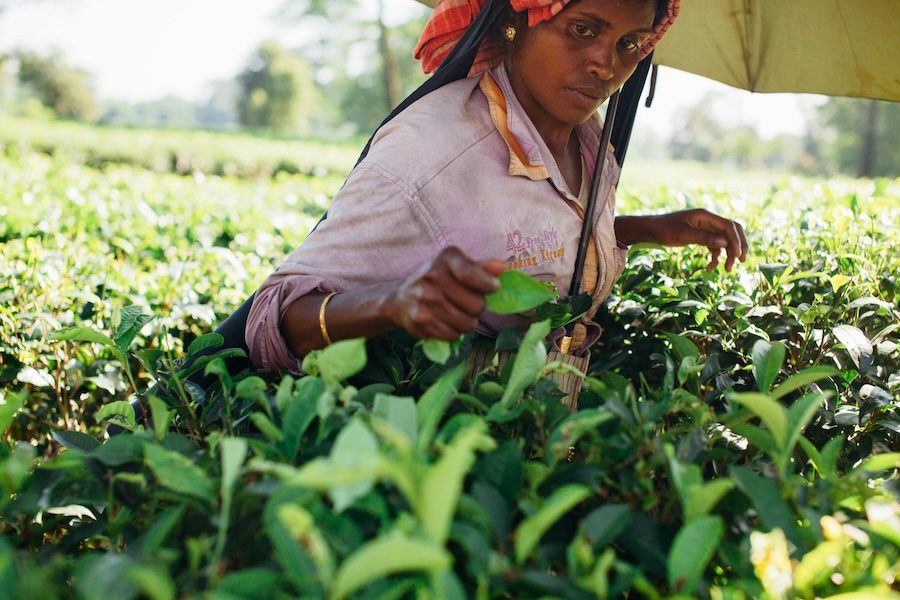
We believe one of the most practical and promising opportunities in African agriculture lies in supporting smallholder farmers to produce more and more reliably while strengthening their resilience to a changing climate. This is the essence of sustainable intensification.
Sustainable intensification brings together a wide range of proven practices designed to increase crop yields and build climate resilience without expanding farmland. It combines improved seeds, better soil and water management, integrated pest control, agroforestry techniques, and smarter use of fertilisers. The aim is straightforward: help farmers grow more on the land they already have, in ways that protect the environment for the long term.
What makes this approach particularly compelling in Uganda is the scale of its potential impact. Smallholder farmers make up around 80% of the agricultural sector and cultivate plots typically smaller than two hectares. Studies show that well-implemented sustainable intensification practices can help double yields for many smallholders, moving away from the current low-productivity cycle toward more consistent and profitable farming.
For Ugandan farmers and their families, the benefits are immediate and tangible. Research on sustainable intensification in Uganda and neighbouring countries shows improvements in food consumption scores, household dietary diversity, and per capita expenditure. Farmers who adopt practices such as maize-legume intercropping combined with better nutrient management often see higher incomes, greater food self-sufficiency, and reduced vulnerability to climate shocks like droughts and erratic rainfall. This translates into more stable livelihoods, better nutrition for children, and the ability to invest in education and healthcare.

At the community and national level, these gains matter enormously. Agriculture employs about 70% of Uganda’s labour force and contributes roughly a quarter of GDP. By increasing productivity and resilience among smallholders, sustainable intensification supports broader food security, reduces rural poverty, and creates more rural jobs from processing and marketing to input supply services. For the government, this aligns directly with national priorities around agro-industrialisation, poverty reduction, and climate adaptation. Stronger smallholder performance also helps lower the risk of food imports and builds a more robust agricultural sector that can weather future climate challenges.
On the international stage, meaningful progress in sustainable intensification enhances Uganda’s reputation as a serious player in climate-smart agriculture and green growth. It demonstrates the country’s commitment to responsible development, something that attracts global attention, partnerships, and investment in carbon markets, green bonds, and sustainable supply chains.
For investors this space offers a compelling mix of impact and commercial potential. Private initiatives providing credit, technical assistance, marketing support, and reliable off-take agreements are showing strong results. Several innovative companies in this field have scaled rapidly, with some achieving unicorn status. These models prove that supporting smallholders can be both socially transformative and commercially viable at scale.
We see sustainable intensification as a foundational part of our agroforestry and agricultural investment strategy. When farmers gain access to the right tools, knowledge, and markets at the right time, the results can be quietly remarkable higher yields, healthier soils, stronger communities, and attractive risk-adjusted returns for patient capital.
The data is compelling, the need is urgent, and the momentum is building. Scaling sustainable intensification thoughtfully across Uganda represents one of the most effective ways to deliver shared prosperity: better lives for farming families, stronger economic foundations for the country, and meaningful opportunities for forward-thinking investors.